FIELD NOTES / 01 · 8 minute read
Choosing your Seiko
Find your starting point: the fit, the feeling and five very different kinds of watch.
A watch can look perfect in a photograph and feel wrong on your wrist. Start with how you want to wear it: a quiet everyday companion, a bold diver, something for a shirt cuff, or a useful extra function.
With Seiko, there is no single “correct” starting point. A modest field-style Seiko 5 can be as enjoyable as a larger Prospex. What matters is that you understand the particular watch you are choosing.
FIRST, THE FIT
One diameter. Only part of the story.
Case diameter tells you how wide the main case is, usually excluding the crown. Lug-to-lug tells you how far it stretches along your wrist. Thickness tells you how high it sits. Lug width tells you which strap width fits between the lugs.
A smaller diameter does not always mean a shorter watch. Seiko lists the SRPG35 field watch at 39.4mm across and 48.1mm lug-to-lug. The SSK003 GMT is wider at 42.5mm but shorter at 46.0mm lug-to-lug. That does not make either universally more comfortable; it shows why one number is not enough.
Measurements: Seiko SRPG35 and Seiko SSK003.
Look for lugs that follow your wrist rather than project beyond it. Check that the crown does not press into your hand and that the clasp sits comfortably underneath. Dial size, bezel width, case shape and strap stiffness all affect the impression.
FIND YOUR CHARACTER
Five ways to wear a Seiko.
These are useful starting points, not strict boxes. A GMT can have a field-watch case; a chronograph can be elegant. Choose the combination that suits your day.

01 / THE STYLES
Diver
A purposeful look, with a practical bezel.
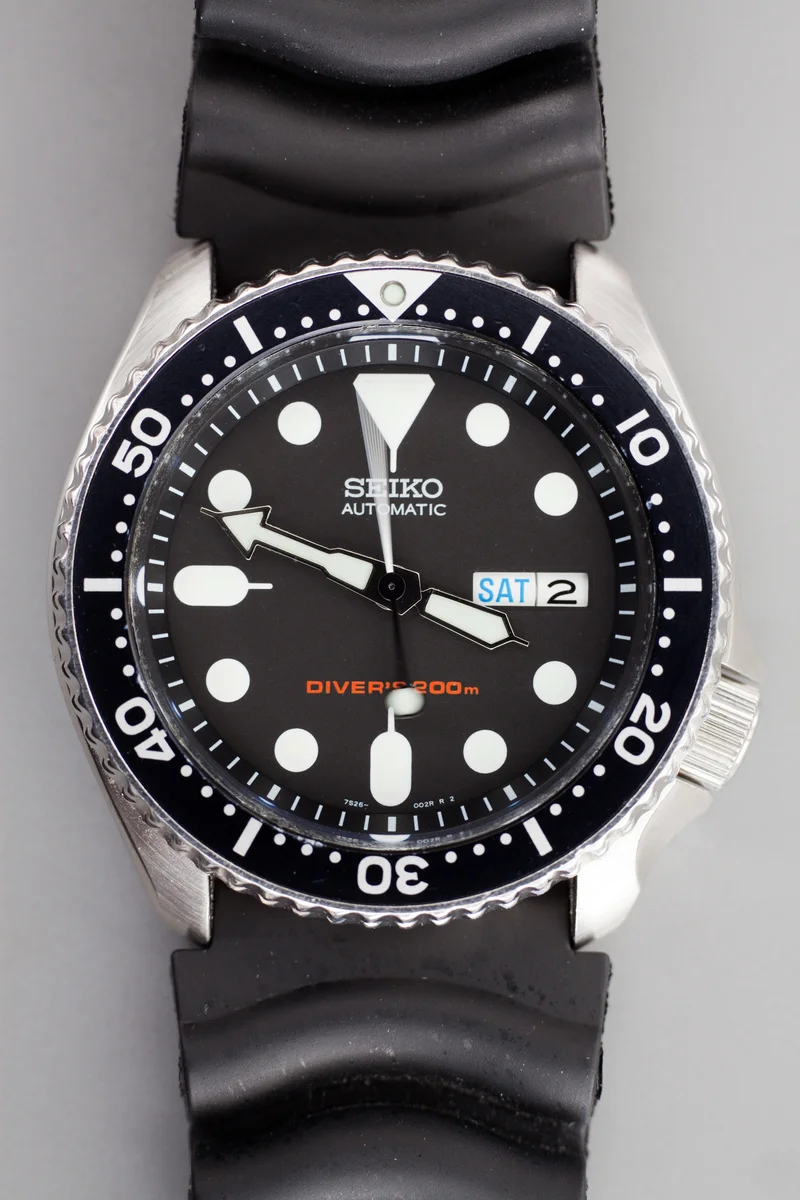
The SKX007 is a recognisable example: a dark dial, bold luminous markers, a timing bezel and a crown tucked around four o’clock. Its visual weight comes as much from the bezel and case as from the diameter.
A diver-style watch is an easy choice if you enjoy strong legibility and a substantial presence with casual clothes. For another shape, look at the cushion-cased Prospex “Turtle”, including the SRPE93.
Check before choosing: bezel action, crown operation, case thickness and current water-resistance evidence. A depth printed on an older dial is not proof that the watch is ready for swimming today.

02 / THE STYLES
Field
Clear, informal and easy to live with.
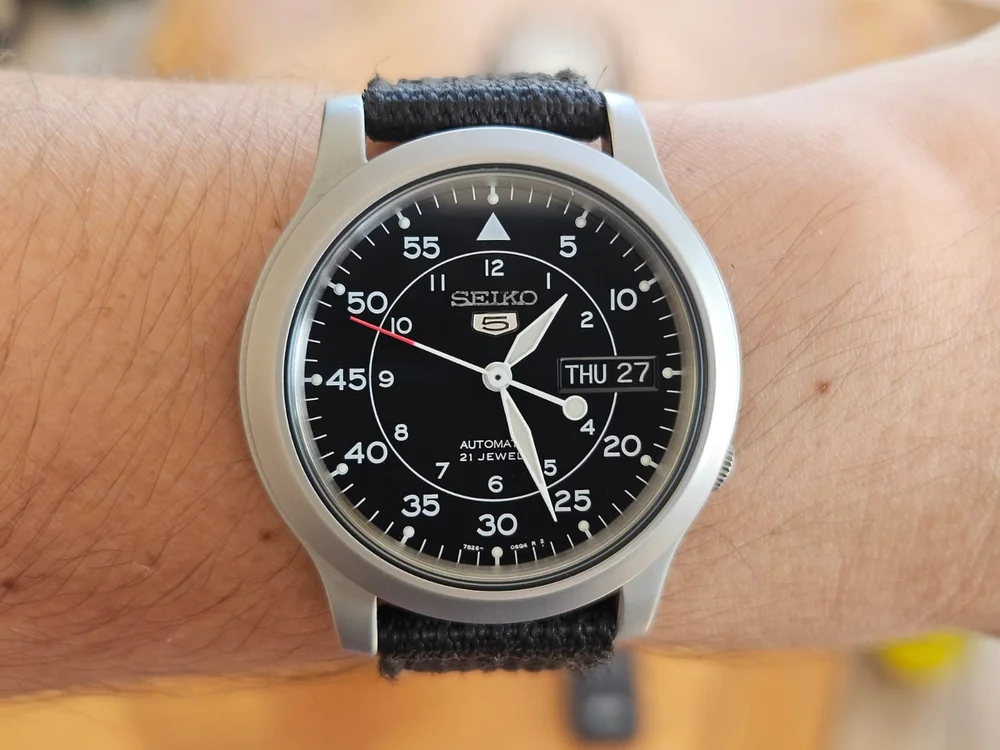
The Seiko 5 SNK809 shown here uses prominent numerals and an uncomplicated, functional appearance. References such as the SRPG35 continue that field-style approach in a different case and movement package.
Fabric and leather straps suit the style particularly well. A broad, open dial can make even a modest case feel quite visible, while long lugs can make a watch wear larger than its diameter suggests.
Check before choosing: lug-to-lug length and how the strap bends away from the case. “Field” describes a design tradition here; it does not establish military issue or provenance.

03 / THE STYLES
Dress
Less visual noise. More attention to the dial.
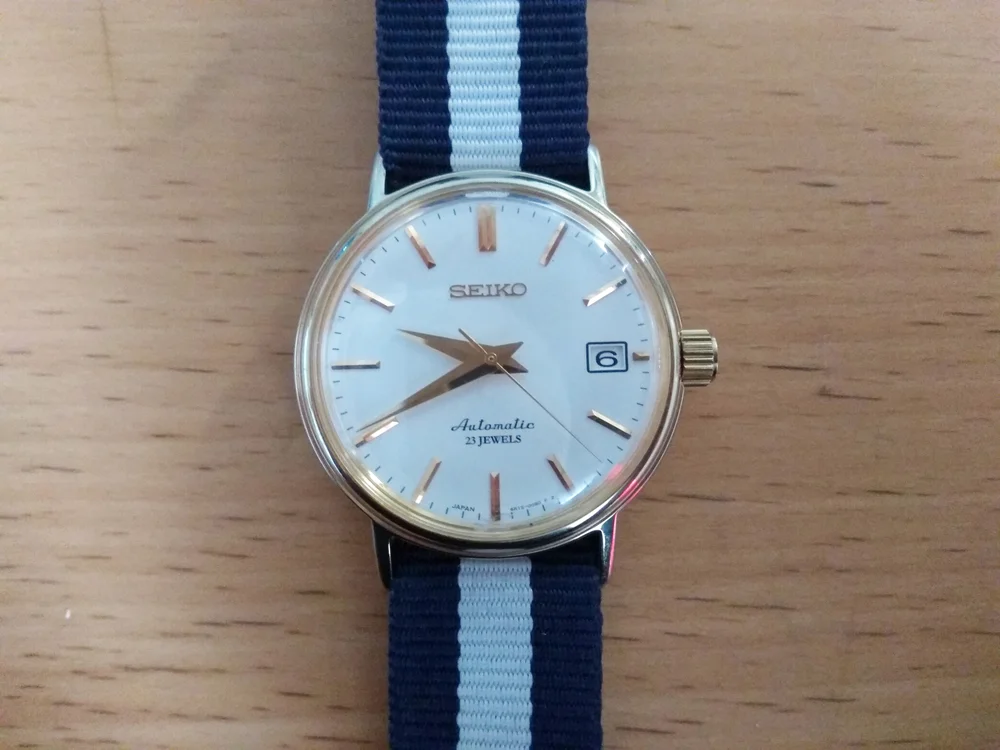
The SARB030 pictured here shows the appeal of a restrained dial and a more formal case. Seiko’s Presage Cocktail Time family offers another route, with dial texture and colour playing a larger role.
A dress watch need not be reserved for a suit. A simple dial on a comfortable strap can make a satisfying everyday watch, especially if you prefer something less imposing.
Check before choosing: thickness under your cuff, dial legibility and strap length. “Dress” does not automatically mean thin, small or suitable for water; check the actual reference.

04 / THE STYLES
GMT
A second time zone at a glance.
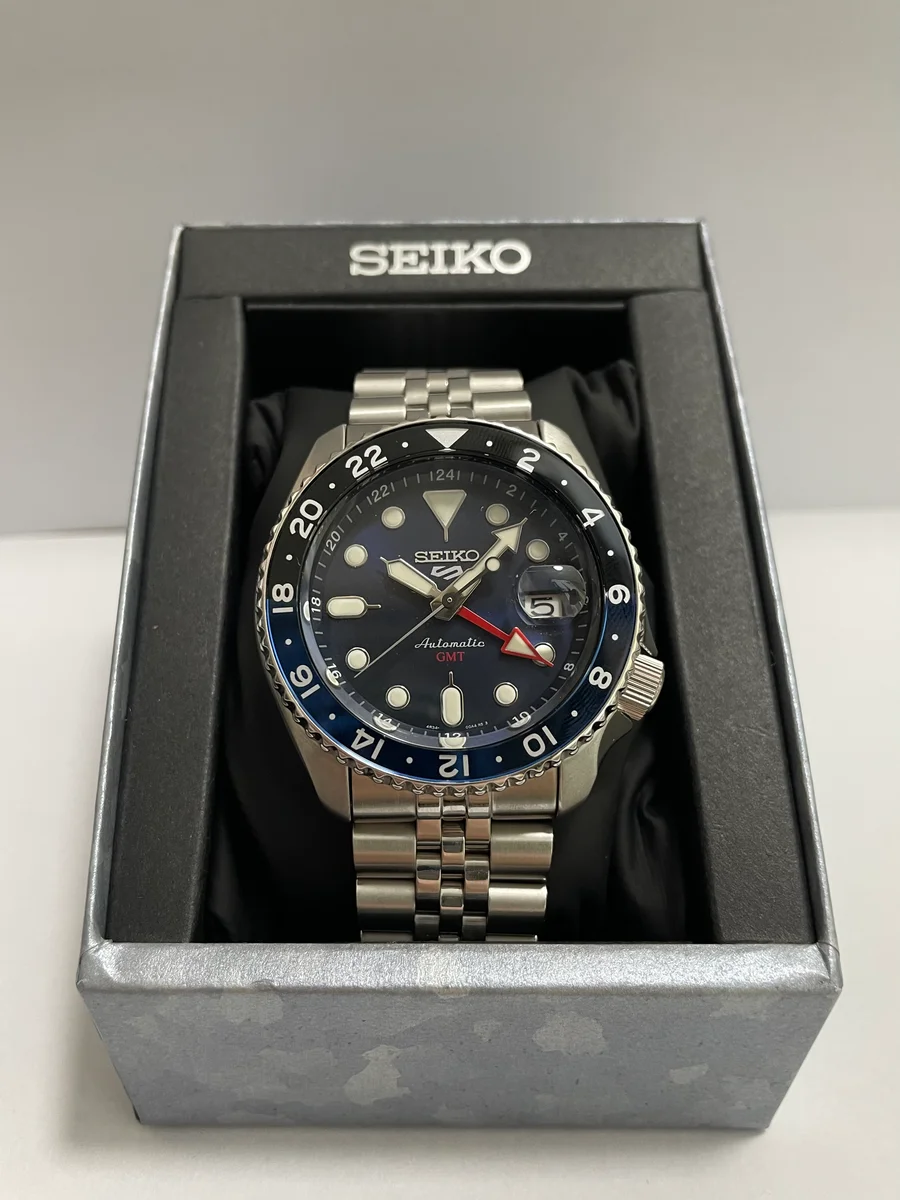
The blue SSK003 combines an extra 24-hour hand with a 24-hour bezel. Set correctly, it can keep another place’s time in view: useful for travel, family abroad or simply remembering when to make a call.
Its 4R34 movement lets you adjust the 24-hour hand independently. Enthusiasts often call this a “caller GMT”; it differs from a “traveller GMT” with a separately adjustable local hour hand. Neither term alone tells you whether a watch suits your routine.
Check before choosing: learn the setting sequence and read the correct scale. The SSK003 is rated at 10 bar; its diver-like appearance is not the same thing as a designated dive watch.

05 / THE STYLES
Chronograph
A stopwatch you can wear.
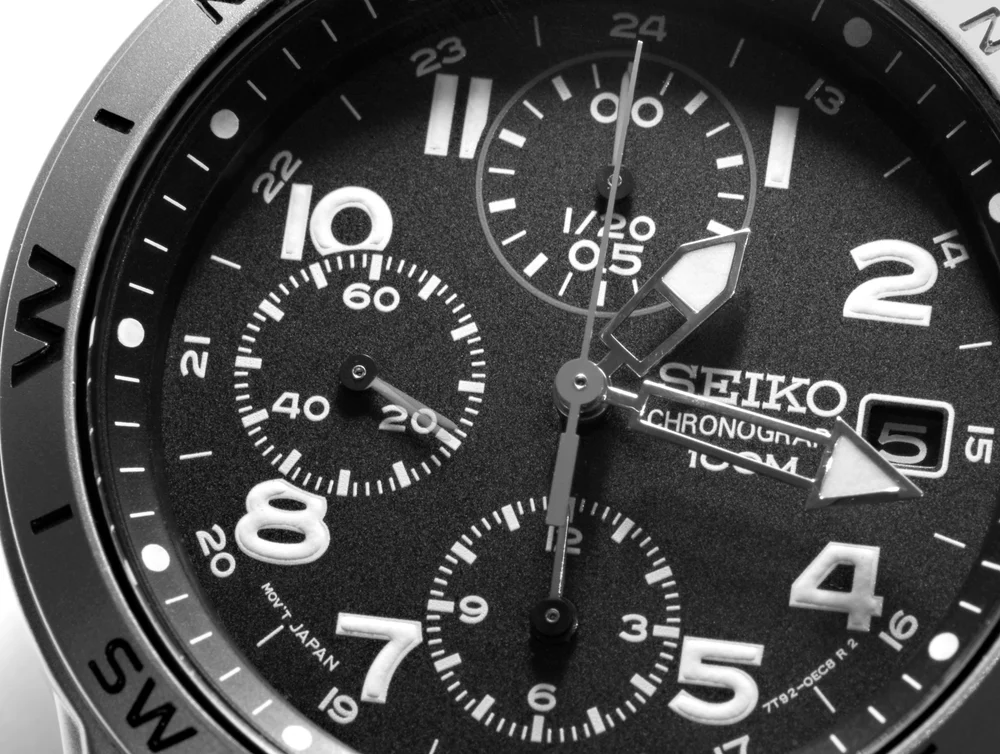
A chronograph adds a stopwatch function, generally controlled by pushers beside the crown. The quartz example pictured here shows the typical subdial layout. Seiko’s solar Speedtimer SSC813 is another example to explore; older mechanical references such as the 6139 offer a different collecting experience.
The attraction is both functional and visual. You may love the detail of a busy dial, or prefer the clarity of a three-hand watch. A chronograph is a function; “chronometer” refers to timekeeping certification and is a different term.
Check before choosing: start, stop and reset behaviour, ease of reading elapsed time, and the movement’s service needs. A central hand may belong to the stopwatch while normal seconds run on a subdial.
THE DAILY ROUTINE
Mechanical, quartz or solar?
Mechanical / automatic
Choose it if you enjoy the mechanism and the ritual. An automatic uses wrist movement to wind its mainspring. Expect to reset it after it runs down; winding and seconds-stop features vary by calibre.
Quartz
A practical choice when you want to pick up a watch and go. Budget for battery replacement and condition checks. A quartz movement is not a lesser reason to enjoy a Seiko.
Solar quartz
Light replenishes a rechargeable cell. It still needs adequate charging and care; “solar” does not mean it can stay in a drawer indefinitely or never need attention.
Make the choice a little simpler.
- Decide where you will wear it most: work, weekends, travel or occasions.
- Measure a watch you already find comfortable. Compare all four dimensions.
- Choose a style you enjoy before chasing a reference everyone else recommends.
- Check the actual watch’s condition, included strap or bracelet length and service information.
- Leave room in your budget for a suitable strap and any clearly identified maintenance.
The right watch is one you want to put on again tomorrow. A specification sheet helps you ask better questions; it cannot make that choice for you.
KEEP EXPLORING
Watch sizes & straps →Buying a pre-owned Seiko →Join the drop list →